
Types of SSL for your website
Secure Socket Layer (SSL), is a digital certificate issued for a Domain by a central authority called the Certificate Authority. SSL validates your websites identity, and encrypts the information visitors send to, or receive from, your site.
SSL encrypts the information sent from user’s browser to your website and also authenticates your websites identity. It ensures a secure website and increase customer loyalty which would prove beneficial for your online business.
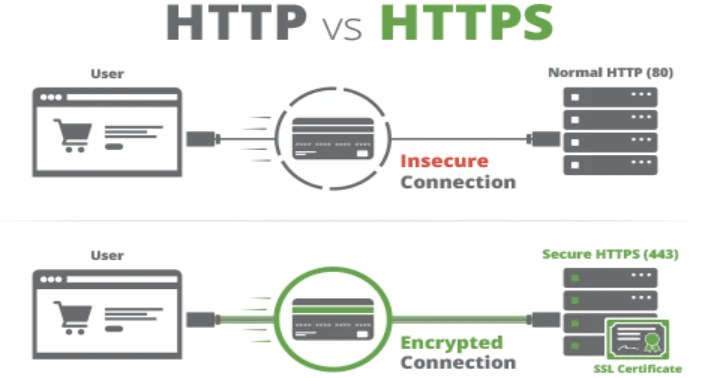
The biggest reason websites use SSL is to protect sensitive information that’s sent between computers and servers. If information like credit card numbers, passwords, and other personal information isn’t encrypted this leaves it open for hackers to easily step in and steal the information.
With the SSL certificate. your information is unreadable to anyone who attempts to steal it. The only people able to decipher it are the intended recipients at the other end of the connection.
SSL certificates are quickly becoming a necessity. According to Google, SSL and HTTPS should be used everywhere across the web. Sites not using SSL will be marked as unsecured if they’re viewed from a web browser
On the other hand, a site that can prove it takes security seriously can attract more visitors. Surfers and online shoppers also increasingly recognize the on-screen presence of a small padlock icon or a website address that begins with “https://…” as signs that they can trust the site they’re connecting to. That’s SSL or ‘secure sockets layer’ in action.
The different types of SSL certificate types are as follows.
1. Domain Validated (DV) SSL Certificate
A Domain Validated (DV) SSL Certificate is an entry-level SSL certificate that provides strong encryption and can typically be issued within minutes.
The certificate requires domain ownership verification and is ideal for personal websites, blogs, brochure websites, and other platforms that require basic website security.
2. Wildcard SSL Certificate
A Wildcard SSL Certificate allows you to secure your primary domain along with an unlimited number of its subdomains using a single SSL certificate.
It provides the same level of encryption as a regular SSL certificate while offering greater flexibility and cost efficiency. It is particularly useful for businesses managing multiple subdomains under a single domain.
3. Extended Validation (EV) SSL Certificate
An Extended Validation (EV) SSL Certificate provides a higher level of organizational identity verification.
Before issuance, the Certificate Authority (CA) performs an extensive validation process to verify the legal identity and existence of the requesting organization, along with its control over the domain.
EV SSL certificates are suitable for businesses that want to establish greater organizational identity assurance and build customer confidence.
4. Organization Validated (OV) SSL Certificate
An Organization Validated (OV) SSL Certificate verifies the legitimacy and existence of the organization requesting the certificate.
The issuing Certificate Authority (CA) conducts an organization verification process before issuing the certificate. OV SSL certificates are commonly used by businesses, corporate websites, and e-commerce platforms that require verified organizational identity.
5. Multi-Domain SSL Certificate (MDC)
A Multi-Domain SSL Certificate (MDC), also known as a SAN (Subject Alternative Name) certificate, is designed to secure multiple domain names and subdomains under a single SSL certificate.
It allows you to secure multiple completely different domains, including domains with different Top-Level Domains (TLDs), through one certificate.
This type of certificate is particularly useful for organizations managing multiple websites or domains that want centralized SSL certificate management.
Note: The appropriate SSL certificate depends on your website structure, domain requirements, organizational validation needs, and the number of domains or subdomains you intend to secure.